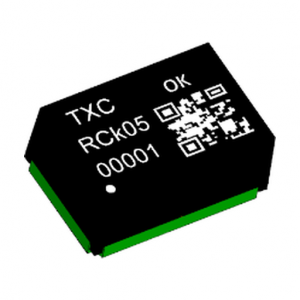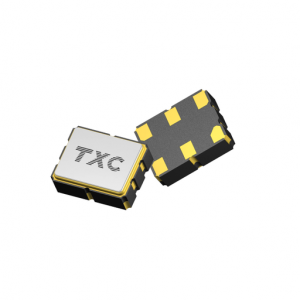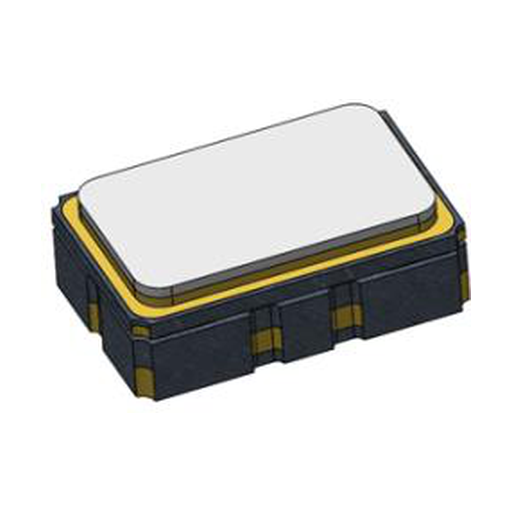
TXC 7P-30.720MBP-T TCXO 30.72 MHz CMOS 3.3 V 5.0 x 3.2 mm
TXC 7P-30.720MBP-T, 30.72 MHz CMOS precise TCXO in the 5.0 x 3.2 x 1.8 mm six-pad package, 2.5 to 3.3 V, catalogued at +/-0.28 ppm. Sourced to order.
Request Price & Availability
Pricing, lead time and bulk discounts are quoted per order — send us your part numbers and quantities and we will reply within one business day.
Email us for a quoteDescription
7P-30.720MBP-T is a 30.720 MHz CMOS TCXO in the 5.0 x 3.2 x 1.8 mm six-pad 7P package, supplied from 2.5 to 3.3 V and catalogued at +/-0.28 ppm. It is the frequency in this family that maps directly onto a cellular sample rate rather than onto a radio reference.
30.72 MHz is a sample rate, not a radio reference
30.72 MHz is 2048 times 15 kHz, which is the subcarrier spacing of LTE. That single relationship explains why the frequency appears in baseband and digital-unit clock trees: a 30.72 MHz reference can be divided by 2048 to recover the 15 kHz symbol clock, and by 2 to give 15.36 MHz, the rate that appears in the same designs for a half-rate path. For a 20 MHz LTE carrier the baseband sample rate is 30.72 Msps, so the oscillator and the converter can share one clock domain instead of two.
In 5G NR the same number survives because the 15 kHz numerology was carried forward, and 30.72 MHz still divides cleanly to the 30 kHz and 60 kHz spacings used at wider bandwidths. That continuity is why a part at this frequency stays in a design across two radio generations.
Stability across the band
The 7P electrical table gives +/-0.10 ppm from -20 to +70 C, +/-0.14 ppm from -40 to +85 C and +/-0.28 ppm from -40 to +105 C. This code is catalogued at +/-0.28 ppm with an operating temperature of -40 to +85 C, so the label is the wider of the two figures that could apply to the part. Load and supply each add +/-0.05 ppm at +/-5%, tolerance after two reflows is +/-2.0 ppm and first-year aging is +/-1 ppm.
For a baseband clock the relevant question is usually not the absolute accuracy but the phase noise that the converter sees after multiplication. The 7P shares the 7N electrical table, and the CMOS output drives 15 pF with 6 ns edges, which keeps the harmonic content predictable enough that a simple low-pass at the converter input is sufficient.
Six pads in 5 x 3.2 mm
Six pads is the base configuration of this package: supply, ground, output and the control pins that the specific code enables. Ten pads adds the AFC and output-enable functions. Because the pads are closer together than on the 7N, the bypass capacitor has to sit directly against the supply pad and the ground return has to drop into a plane rather than run as a trace. At 1.8 mm tall the part fits under a shield can with room for the can’s own clearance.
Where it sits against the 7N
The same 30.720 MHz frequency is available in the 7N package at 7.0 x 5.0 x 2.0 mm with the identical electrical table. The 7P is the choice when the digital unit is dense and the clock has to live next to the converter; the 7N is the choice when the layout has room and the AFC trace needs to be kept clean. Both are sourced to order.
Ordering this code
The code fixes 30.720 MHz, CMOS, six pads and the catalogued stability. A different frequency in the 10 to 52 MHz range, the ten-pad option with AFC, or a tighter band moves to another 7P code. Parts are sourced to order; availability and lead time are confirmed with each quotation. Send the board constraints and the annual quantity to leon@vexelora.com.
Specification summary
| Nominal frequency | 30.720 MHz |
|---|---|
| Series / package | 7P, 5.0 x 3.2 x 1.8 mm, 6 pad SMD |
| Output type | CMOS |
| Supply voltage | 2.5 to 3.3 V +/-5% |
| Current consumption | 10 mA max, CMOS output |
| Operating temperature | -40 to +85 C |
| Frequency stability, -20 to +70 C | +/-0.10 ppm |
| Frequency stability, -40 to +85 C | +/-0.14 ppm |
| Frequency stability, -40 to +105 C | +/-0.28 ppm |
| Stability vs load, +/-5% | +/-0.05 ppm |
| Stability vs supply, +/-5% | +/-0.05 ppm |
| Frequency tolerance, after two reflows | +/-2.0 ppm |
| Aging, first year | +/-1 ppm |
| Start-up time | 5 ms max to 90% of final amplitude |
| Duty cycle | 40 to 60% |
| Output swing, CMOS | 90% / 10% of Vcc into 15 pF, rise and fall 6 ns max |
Typical applications
- LTE and 5G NR radio unit clocking
- Digital unit and baseband reference
- Remote radio head timing
- Test equipment sample clock
Related TXC timing parts
- TXC 7P Series TCXO, full family and bands
- TXC frequency control products at Vexelora
- 7N-26.000MBP-T, 26.000 MHz
- 7N-38.400MBP-T, 38.400 MHz
- 7N-40.000MBP-T, 40.000 MHz
- 7P-38.400MBP-T, 38.400 MHz
- TXC OG Series OCXO, +/-5 ppb grade in 9.8 x 7.6 mm
Send the frequency, temperature band and annual quantity to leon@vexelora.com for a quotation. Availability and lead time are confirmed with each quotation.
Datasheet
Full electrical tables and package drawings are in the official manufacturer datasheet: Download the TXC 7P-30.720MBP-T datasheet (PDF).
Specifications
| Attributes | Value |
|---|---|
| Brand |
TXC |
| Condition |
New / Original |
| Packaging |
Standard export carton |
| Lead Time |
Availability and lead time confirmed with each quotation |
| Warranty |
12 months |
| Series |
7P |
| Nominal frequency |
30.720 MHz |
| Package |
7P, 5.0 x 3.2 x 1.8 mm, 6 pad SMD |
| Output type |
CMOS |
| Supply voltage |
2.5 to 3.3 V |
| Frequency stability |
+/-0.28 ppm (catalogued); +/-0.10 / 0.14 / 0.28 ppm by band |
| Operating temperature |
-40 to +85 C |